Creative Siding runs licensed Siding Installation crews for homes and businesses in North Granby, CT. We measure the job before we price it — not after.
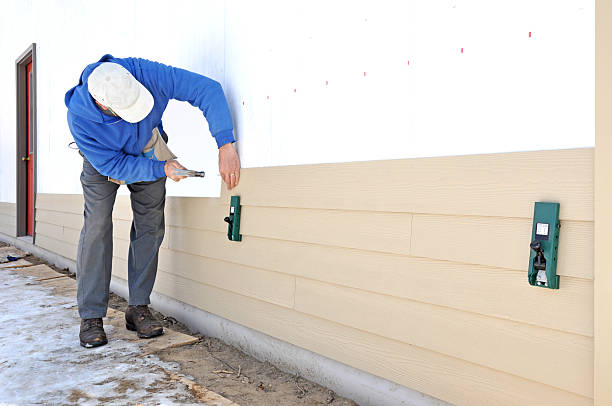
Creative Siding doesn't hand your project off to whoever's cheapest that week. Call +1-844-782-0929 and the person scheduling your job is the same company standing behind the warranty a year later.
We started as a small crew doing repair work and grew because the repairs held up, not because a franchise fee bought us a territory.
We check licensing and background before anyone gets sent to your address, not after a complaint. That's not a policy for show — it's the difference between a repair that holds and one that gets redone in two years.
Either way, the estimate process and the install standard stay the same — we don't cut corners because the job came in as an emergency. If a repair genuinely fixes the problem, that's what we'll quote — not a replacement you don't need yet.
We're rarely the cheapest quote on the table, and we won't pretend otherwise — we're the crew that shows up when we say we will and doesn't leave a mess behind. We turn down tight deadlines that would mean skipping proper flashing or moisture barriers, because that corner always resurfaces within a year or two.
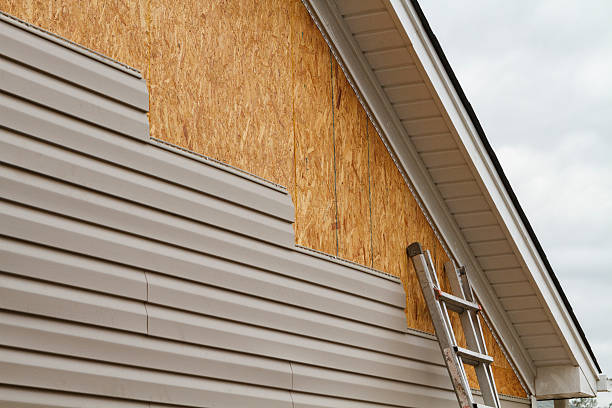
By the time siding looks obviously bad from the curb, the damage underneath is usually further along than it appears.
Here's the full breakdown of what we handle.
A wind-lifted panel flapping before the next storm, a branch through the wall, water already tracking behind the siding — this doesn't wait for next week. First priority on an emergency call is always stopping water intrusion — the cosmetic repair comes second.
The reason emergency response matters so much with siding specifically is that the damage compounds fast — what starts as a single panel becomes a section of rotted framing if it's ignored through one more rainstorm.
A residential estimate here means someone stood on your property and looked at the real problem. Not every home needs the premium option, and we'll say so if that's the case.
Either way, you'll get a specific start date, not a vague "sometime next month" that keeps shifting.
Commercial jobs come with tenants and deadlines, and we scope around both, not around our own convenience. You get a direct point of contact, not a rotating cast of subcontractors answering different questions.
Commercial contracts also come with paperwork most homeowners never deal with — certificates of insurance, lien waivers, sometimes prevailing wage documentation depending on the property — and we handle that as part of the job, not as an extra line item.
Insulated vinyl does more than update the look of a house — the foam backing adds a real thermal layer that shows up on utility bills. Corner posts, J-channel, and detail work get priced into the same estimate, not tacked on as a surprise later.
More often than not, it can be — it just takes someone willing to source the right profile instead of defaulting to whatever's easiest to install.
Every job starts as a phone conversation, not a sales script — call +1-844-782-0929.
Not every home needs the most expensive option on the shelf, and we'd rather explain the real trade-offs than push whatever carries the highest margin. We install all of the following, and we'll say honestly which one makes sense for your situation.
Fiber cement, like James Hardie, tends to outperform vinyl in high-wind and high-moisture conditions, but it costs more upfront and takes longer to install. Climate exposure matters more than most homeowners realize — a house facing prevailing winds ages differently than one that's shaded and sheltered.
A twenty-five-year warranty sounds identical from one company to the next until you read what actually voids it, and we walk through that with every homeowner before they commit to a material.
Here's what separates a written estimate from a verbal guess.
We put this together because these are the exact questions that come up in our estimate visits, usually after a homeowner has already been burned once.
| Category | With Creative Siding | Typical Contractor |
|---|---|---|
| Pricing | Written, itemized estimate before work starts | Verbal ballpark, line items added later |
| Licensing | Verified CT license, shown on request | "Trust me" — no documentation offered |
| Response Time | Estimates scheduled within 48 hours | Days of unreturned calls |
| Crew | Trained, background-checked, employed directly | Rotating day-labor subcontractors |
| Warranty | Manufacturer-backed, documented in writing | Verbal promise, hard to enforce |
| Cleanup | Daily debris removal, protected landscaping | Cleanup "at the end," if at all |
None of this is complicated, and none of it should be unusual — it's just easy to skip when nobody's checking, and there's no state agency showing up to verify that a contractor actually followed through on any of it.
"Every other quote I got was a round figure with no breakdown — this one had material and labor listed separately."
"Half our exterior came down in high winds and I expected to wait days — they came out that same evening."
"As a property manager, the thing I care most about is someone sticking to the timeline, and they did exactly that."
"We were quoted a much bigger job elsewhere and got an honest, smaller estimate here instead."
"Switched to insulated vinyl and the next bill actually showed the difference."
"The estimator answered every question directly instead of dodging the ones that were inconvenient."
"Saved thousands compared to what we were braced to pay."
These are the ten questions that come up most often during estimate calls, answered the same way we'd answer them on the phone.
Storm-related damage gets priority dispatch — call +1-844-782-0929 and we'll give you the earliest available slot.
Estimates are always free and always documented, never just a number over the phone.
Yes — our emergency line covers board-up, moisture sealing, and temporary repairs to stop water intrusion.
Cost depends on square footage, material choice, and how much old siding needs removal.
Documentation is available before the job starts if you'd like to see it.
The goal is a repair that blends in, not one that stands out.
You don't have to manage the claims process alone.
You'll get a realistic timeline at the estimate, not an optimistic one meant to close the deal.
Fiber cement generally holds up better against wind, moisture, and temperature swings, though it costs more upfront.
Most siding work is exterior-only, so being home for the full job isn't required.
We cover North Granby and the towns nearby, not just the downtown core. Call +1-844-782-0929 to confirm coverage before scheduling anything.
A property fifteen minutes outside North Granby gets the same estimate process and the same crew standard as one downtown.
Reach Creative Siding directly at +1-844-782-0929.
Call +1-844-782-0929